14 Major Allergens: Complete List with Examples for Restaurants
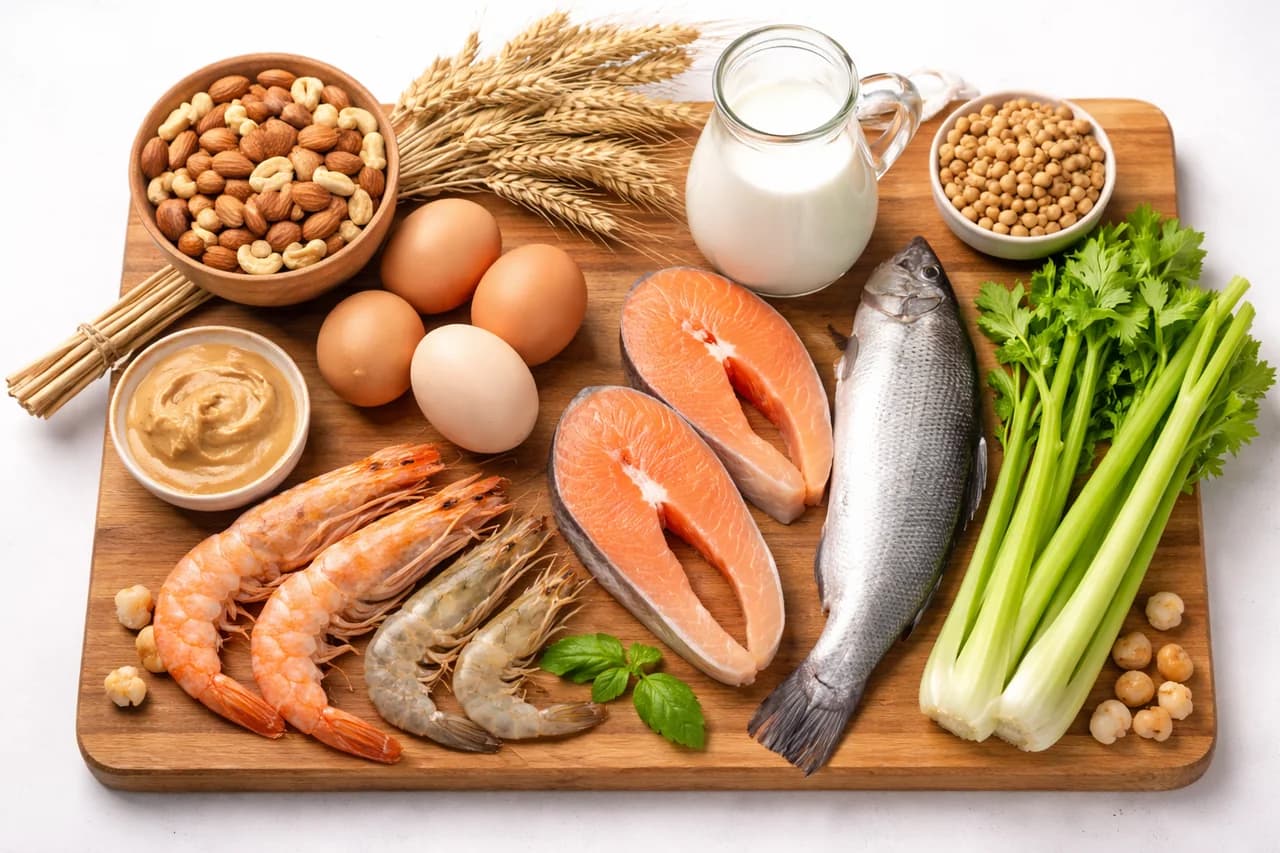
EU Regulation 1169/2011 requires that allergen information is provided for all food sold or served to consumers.
EU Regulation 1169/2011 requires that allergen information is provided for all food sold or served to consumers. For restaurants, cafés, food trucks, and catering companies, this means you must be able to tell every customer which of the 14 major allergens are present in each dish you serve. This is not optional, and it is not limited to pre-packaged food. This guide covers all 14 allergens with practical examples from restaurant menus, explains how to label them correctly, and shows you how to manage cross-contact in your kitchen.
The 14 Major Allergens: Full List with Restaurant Examples
1. Gluten-Containing Cereals (Wheat, Rye, Barley, Oats)
Gluten is one of the most widespread allergens in restaurant kitchens because it appears in so many forms beyond obvious bread and pasta.
- Bread, rolls, pizza bases, pasta, noodles, couscous
- Beer and ale used in batters, marinades, and braising liquids
- Soy sauce: most commercial soy sauces contain wheat as a fermentation ingredient
- Flour used as a thickener in soups, gravies, and sauces
- Breadcrumbs in breaded schnitzel, croquettes, and stuffings
- Seitan (wheat gluten protein), used in vegetarian and vegan dishes
2. Crustaceans
- Shrimp, prawns, crayfish, crab, lobster, langoustine
- Prawn or lobster bisque, including stocks made from crustacean shells
- Seafood sauces and pastes that contain shrimp
3. Eggs
- Mayonnaise, aioli, hollandaise, béarnaise
- Fresh pasta, egg noodles
- Breading (egg wash before breadcrumbs)
- Caesar dressing (raw egg yolk in traditional recipes)
- Meringues, mousses, soufflés, custards, ice cream
- Egg wash on pastry glazes
4. Fish
- Fish sauce (Nam Pla, Nuoc Mam): used extensively in Thai and Vietnamese cooking
- Worcestershire sauce: contains anchovies
- Caesar dressing: traditional recipes include anchovy paste
- Some canned stocks and bouillon cubes
- Tapenades and olive spreads that include anchovies
5. Peanuts
- Peanut oil used for frying: refined peanut oil is generally considered safe for most peanut-allergic individuals, but cold-pressed or expeller-pressed peanut oil retains allergen proteins
- Satay sauce, peanut dipping sauces
- Some Asian desserts and snacks
- Groundnut stew and West African-inspired dishes
6. Soybeans
- Soy sauce, tamari (check the label: some tamari is wheat-free but still contains soy)
- Tofu, tempeh, edamame
- Miso paste used in dressings, soups, and marinades
- Soy lecithin used as an emulsifier in chocolate and baked goods
- Many meat substitutes and plant-based protein products
7. Milk and Lactose
- Butter, cream, cheese, yoghurt, crème fraîche
- Casein and whey (milk proteins found in many processed foods)
- Ghee (clarified butter): retains milk proteins
- Cream-based pasta sauces, béchamel, mornay
- Some margarines and spreads that contain milk solids
- Lactose as a filler in some medications and processed meats
8. Tree Nuts
This category covers almonds, hazelnuts, walnuts, cashews, pecan nuts, Brazil nuts, pistachio nuts, macadamia nuts, and Queensland nuts. Each is a separate allergen, but all must be declared as tree nuts.
- Desserts: pralines, marzipan (almonds), baklava (walnuts/pistachios), florentines (almonds, hazelnuts)
- Pesto: traditional basil pesto uses pine nuts, but many recipes substitute cashews or walnuts
- Nut oils used in dressings (walnut oil, hazelnut oil)
- Dukkah (hazelnut and spice blend)
- Some curry pastes that use cashews as a thickener
9. Celery
- Celery salt: used in seasoning blends, coleslaw, Bloody Mary mix
- Stocks and bouillons: many commercial stock cubes contain celery extract
- Soups and stews using celery as a base vegetable
- Some spice mixes and seasoning blends
- Celeriac (celery root) salads
10. Mustard
- Mustard seeds, mustard powder, prepared mustard (Dijon, wholegrain, English)
- Salad dressings and vinaigrettes that use mustard as an emulsifier
- Marinades for meat and fish
- Some curry powders and spice blends that include mustard seeds
- Honey mustard dipping sauces
11. Sesame
- Tahini (sesame paste): used in hummus, baba ganoush, halva
- Sesame oil: used in dressings and finishing oils in Asian cuisine
- Sesame seeds on burger buns, bagels, breadsticks
- Some bread and crackers with sesame coatings
- Furikake seasoning and some Japanese condiments
12. Sulphur Dioxide and Sulphites (above 10 mg/kg or 10 mg/litre)
- Wine and wine-based sauces (reduction sauces, coq au vin)
- Dried fruit: apricots, raisins, sultanas used in chutneys, tagines, and desserts
- Vinegar: particularly wine vinegar
- Some preserved meats (certain sausages, chorizo)
- Fruit juices and cordials used in cocktails
13. Lupin
- Lupin flour increasingly used in gluten-free bread and pasta products
- Some bakery products marketed as high-protein or gluten-free
- Lupin seeds served as snacks in Southern European cuisine
- Note: lupin is a legume related to peanuts; peanut-allergic individuals may react to lupin
14. Molluscs
- Squid and calamari, octopus, cuttlefish
- Clams, mussels, oysters, scallops
- Squid ink pasta and risotto nero
- Seafood platters that include mixed shellfish
How to Label Allergens for Customers
You have several options for communicating allergen information, and you can use more than one method:
- Written menus: allergens highlighted in bold or italic within the dish description, or listed after the description. This works well for fixed menus where dishes do not change frequently.
- Allergen tables: a matrix showing each dish in rows and each of the 14 allergens in columns, with a tick or symbol indicating presence. These are easy for customers to scan and easy for you to update - and you can start from a ready-made allergen documentation package instead of building the matrix from scratch.
- QR codes: link to an allergen table on your website or a dedicated allergen information page. Useful for seasonal menus or operations with a large number of dishes. The information must be accessible without requiring customers to ask staff.
- Verbal information from staff: acceptable only if you also have a written notice stating that allergen information is available upon request. Staff must then be able to provide accurate, up-to-date information.
Cross-Contact: What It Is and Why It Matters
Cross-contact is the unintentional transfer of an allergen from one food or surface to another. It is different from cross-contamination (which refers to microbiological transfer), but it carries the same risk for allergic customers.
Steps to manage cross-contact in your kitchen:
- Use separate utensils, chopping boards, and equipment for allergen-free dishes
- Change cooking oil between batches if the previous batch contained an allergen (e.g., frying fish in oil that will then be used for chips ordered by a fish-allergic customer)
- Prepare allergen-free dishes first, before other preparation begins, when surfaces are at their cleanest
- Use separate, clearly labelled packaging and storage containers for allergen-containing ingredients
- Train all food handlers to understand which ingredients contain which allergens and why cross-contact is a serious risk
For managing allergen incidents, see our guide at Allergic Reaction in a Restaurant: What to Do.
Common Mistakes That Put Customers at Risk
- Assuming a dish is allergen-free without checking all components: a "dairy-free" soup that uses a commercial stock cube containing milk powder, or a "gluten-free" dish prepared with soy sauce containing wheat, is not allergen-free. Check every ingredient, including garnishes and sauces.
- Not updating allergen information when a supplier changes ingredients: if your stock cube supplier reformulates their product and adds celery extract, your allergen table is now wrong. Request ingredient specifications from all suppliers and review them whenever you receive a new batch or are notified of a recipe change.
- Inconsistent communication between kitchen and front of house: the chef knows what is in a dish; the server does not always. Every member of your team who takes orders or serves food needs allergen training - professional allergen templates with staff training guides make this much easier to roll out.
- Relying on "may contain" disclaimers as a blanket cover: "may contain" statements should reflect genuine cross-contact risk, not be used as a way to avoid declaring known allergens.
Frequently Asked Questions
Is allergen labelling required for food served at the table?
Yes. EU Regulation 1169/2011 applies to all food sold or served in restaurants, cafés, and other catering establishments, not just pre-packaged products. You must provide allergen information for every dish on your menu, whether served at the table, at a counter, or as takeaway.
What if my supplier changes the recipe without telling me?
This is a known risk, and managing it is your responsibility. Include a clause in your supplier agreements requiring them to notify you of any ingredient changes. Request up-to-date product specification sheets regularly, particularly when you receive a new delivery from a new batch. If a supplier cannot provide accurate allergen data, consider switching suppliers.
Do I need to declare allergens for trace amounts?
The legal threshold for sulphites is 10 mg/kg or 10 mg/litre: below this level, declaration is not required. For all other allergens, there is no de minimis threshold: if an allergen is intentionally used as an ingredient at any level, it must be declared. Unintentional trace amounts from cross-contact are addressed through cross-contact management procedures, not through blanket declarations.
Can I just write "may contain" for everything?
No. "May contain" is a precautionary statement for genuine, unavoidable cross-contact risk. Using it as a catch-all to avoid the work of proper allergen labelling does not comply with Regulation 1169/2011 and does not protect allergic customers. It may also mislead customers into thinking a dish is safer than it is, or cause them to unnecessarily avoid a dish that is actually safe for them.
Allergen Documentation Templates from GastroReady
GastroReady provides allergen documentation templates including ready-to-use allergen tables, customer information cards, and staff training guides. Adapted for restaurants, cafés, food trucks, and catering companies operating under Polish and EU food law.