When to Update Your HACCP: A List of Triggers You're Probably Ignoring
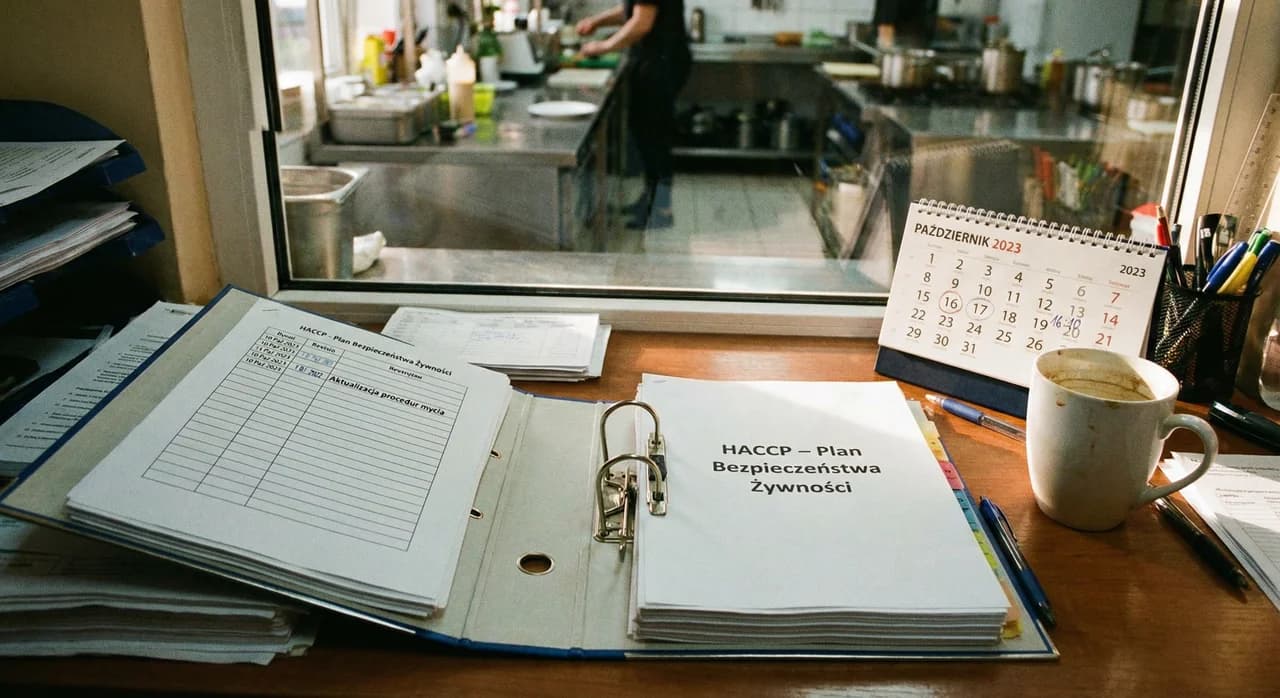
HACCP isn't 'once and done'. See 12 situations after which your documentation should be reviewed and do a quick self-test.
HACCP does not break "overnight." It breaks quietly. First, you change the menu. Then a new supplier comes in. Later, you buy a new cold room. Someone changes the packaging method for deliveries because "it's faster." And the documentation... stays exactly the same. Then on inspection day, the classic happens: you have a binder, but you have no consistency. This post gives you a simple list of situations after which you should review your HACCP/GHP/GMP. This is not an instruction on how to build a system from scratch - that is what GastroReady is for, where you get a ready-made structure, records, implementation instructions, and real support to make sure it works in the kitchen, not just in a PDF.
The rule that settles everything
If a change affects even one of these three things:
- Process (what you do and how you do it)
- Risk (what could go wrong)
- Evidence (how you monitor and record it)
...then your HACCP should at least be reviewed.
12 triggers that usually mean your HACCP needs updating
Below is a list of the most "real-life" triggers. Not all of them apply to every establishment, but at least a few will apply to almost everyone.
- Menu or ingredient changes
- a new dish
- a new raw material
- a recipe change (e.g., making sauce from scratch instead of using a pre-made one)
Why it matters: different ingredients = different risks (including allergens) and different process steps.
- New allergens or new allergen declarations in your messaging
- you add "gluten-free," "lactose-free," "vegan"
- you expand the allergen list on the menu
Why it matters: declarations raise requirements for separation and control.
- Starting delivery, catering, or changing your packaging method
- insulated bags come in, new containers, new labels
- the order assembly sequence changes
Why it matters: new risks appear around time/temperature, order mix-ups, and cross-contact.
- New supplier or a new type of product from a supplier
- you switch wholesalers
- you move to a different brand of semi-finished product
Why it matters: quality, parameters, delivery method, and receiving requirements change.
- Equipment change that alters the process
- a new cold room, freezer, oven, vacuum sealer, grill
- a change in equipment capacity or layout
Why it matters: storage, times, temperatures, and workflow change.
- Kitchen layout or zone changes
- rearranging workstations
- a new service counter, new storage area, different packaging location
Why it matters: cross-contamination risks and "dirty/clean" zones can change in a single day.
- Changes to cleaning and disinfection
- new cleaning chemicals
- a new cleaning schedule
- a different way of storing chemicals
Why it matters: procedures must match what you actually do and what you actually use.
- Staff turnover, new manager, new core kitchen team
- "the one who knew everything" leaves
- new people join the shift
Why it matters: a system without team onboarding becomes "knowledge in one person's head" - which is a risk.
- Changes in working hours or production rhythm
- you start producing earlier / later
- new peak periods appear (e.g., breakfast service, school orders, events)
Why it matters: different storage times, different workloads, different points of failure.
- Changes in the type of sales
- more takeaway, less dine-in
- selling by the piece, buffet, seasonal pop-up
Why it matters: the dispatch, assembly, and product control steps change.
- "Near-miss" events or quality complaints
- suspected food poisoning
- complaints about freshness, temperature, foreign objects
Why it matters: it is a signal that somewhere in the process there is a gap. HACCP should help close it, not sweep it under the rug.
- Inspection with remarks or an internal audit that found issues
- inspector's comments
- recurring gaps in records
Why it matters: if something keeps coming back, the system is not working in practice.
Quick test: is it time for an update? Answer YES/NO:
- Have the menu or recipes changed in the last 3 months?
- Has a new allergen or new declaration appeared on the menu?
- Have you changed a supplier or a core product?
- Have you changed equipment or the kitchen layout?
- Have the packaging/delivery rules changed?
- Has the team changed or started rotating more frequently?
- Are records being kept differently than what the procedures describe?
If you have 2x YES - a review is the minimum. If you have 4x YES - it very often means the documents and the kitchen have started living separate lives.
The most common trap: "it's a small change, so I won't touch HACCP." The biggest problems do not come from "major overhauls" - they come from small changes multiplied by
daily operations:
- a different work sequence at the service station because it is faster
- packaging moved "temporarily" to a worse location
- a new semi-finished product because it is cheaper
- a new employee who does things "their own way"
HACCP must work under stress. If the system requires ideal conditions, it is not a system - it is a theory.
Where GastroReady comes in and why a blog cannot replace it. This post shows you when the warning light turns on. GastroReady does the rest: it gives you a ready-made structure, records, instructions, and an implementation method that does not rely on the owner remembering everything.
FAQ. Do I have to update HACCP after every change? Not always "rewrite everything." Often a review and update of specific sections is enough: the process, risk analysis, records, or procedures. How do I know exactly what to change? If a change affects the process/risk/evidence (monitoring), it usually affects documents too. The practical problem is that without a system, it is easy to overlook a "small element" that later becomes a big issue.
Is updating just paperwork? No. An update without team implementation is cosmetic. The most important thing is that the kitchen and the documents speak the same language again.
Need complete HACCP documentation?
GastroReady offers ready-made HACCP, GMP, and GHP templates for every type of food business. From 299 PLN, with PL/EN instructions.