Hand Washing Procedure in Catering: What Sanepid Checks
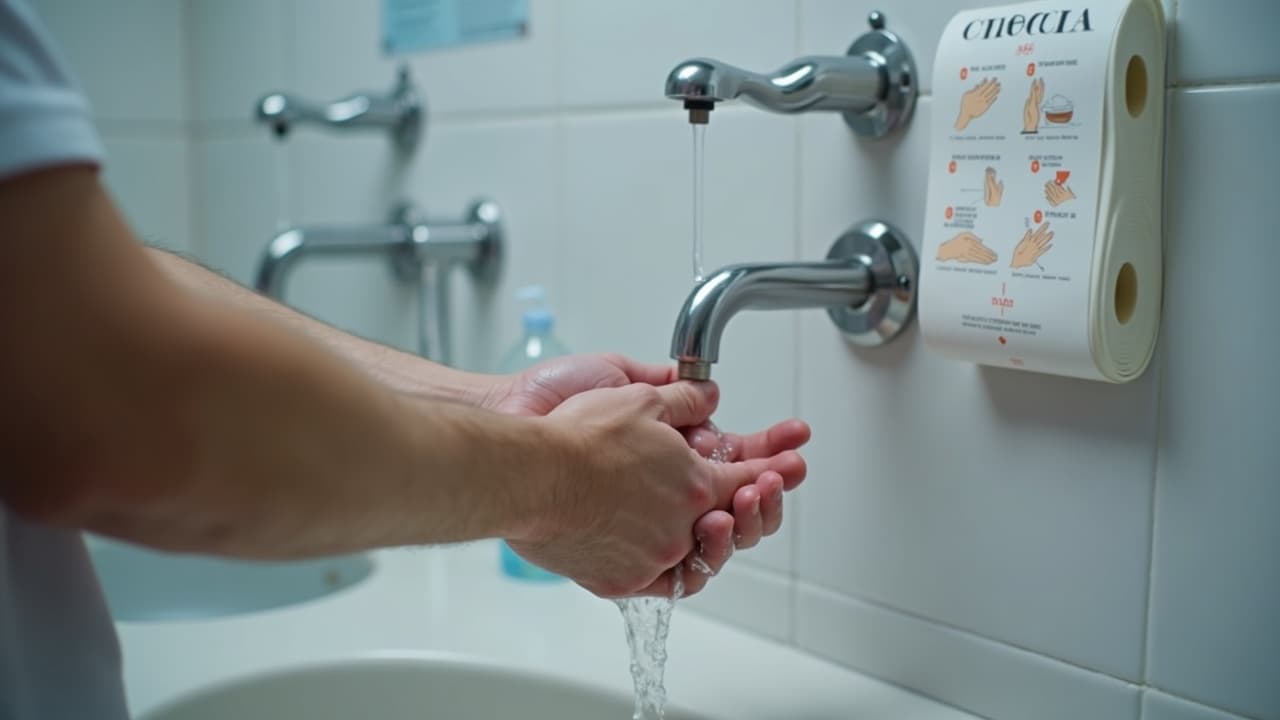
Hand washing is the single most effective measure against cross-contamination in a professional kitchen.
Hand washing is the single most effective measure against cross-contamination in a professional kitchen. Every food safety expert, every HACCP auditor, and every Sanepid inspector will tell you the same thing. The challenge is not awareness: it is execution. Most hand washing in catering kitchens is too short, incomplete, or skipped entirely between tasks. This article gives you the exact standard your kitchen needs to meet, and how to build it into your team's daily routine.
When to Wash Your Hands: 12 Mandatory Situations
Your HACCP plan - whether written in-house or based on a professional HACCP documentation package - should list these as non-negotiable. Train every food handler to treat this list as a reflex, not a reminder:
- Before starting work, even if you have just arrived and feel clean.
- After touching raw meat, poultry, or fish, including packaging that has been in contact with raw product.
- After handling waste or rubbish, including changing bin liners or touching bin lids.
- After using the toilet, without exception, every time.
- After blowing your nose, sneezing, or coughing, even if you covered with your elbow.
- After touching your face or hair, including adjusting a hat or headband.
- After handling cleaning chemicals or sanitizing products.
- After handling money, particularly relevant for food trucks and counter service operations.
- After returning from a break, including smoking, phone use, and eating, regardless of how brief the break was.
- Before putting on gloves and after removing them: gloves are not a substitute for clean hands.
- After handling allergen-containing ingredients: this is critical when switching to allergen-free preparation. Cross-contact through hands is a real anaphylaxis risk.
- After receiving goods from outside, including handling delivery packaging, cardboard boxes, and external containers.
Post this list at every hand wash sink in your kitchen. It is not enough for your head chef to know it: every food handler on every shift must be able to name these situations unprompted.
The 6-Step Hand Washing Technique (WHO/CDC Standard)
Twenty seconds is the minimum. Most people who think they wash their hands properly complete the process in six to eight seconds. Here is the correct technique:
- Wet hands with warm running water. Do not apply soap to dry hands.
- Apply soap. Use a minimum of one full pump from a liquid soap dispenser. The amount matters because insufficient soap cannot create the lather needed to lift pathogens from skin.
- Rub all surfaces for at least 20 seconds. This is the step most people cut short. Cover: palms rubbed together, back of each hand with the opposite palm, between fingers interlaced, fingertips rubbed into opposite palm in a circular motion, each thumb rotated in the opposite hand, and both wrists.
- Rinse thoroughly under running water. Remove all soap and loosened debris. Residual soap is a contamination risk on food contact surfaces.
- Dry with a single-use paper towel. Cloth towels harbour bacteria and spread contamination. A single-use paper towel is the only compliant option in a catering environment.
- Use the paper towel to turn off the tap. Your hands are now clean: touching the tap handle, which was touched before washing, recontaminates them. Dispose of the towel without touching the bin lid if possible.
The 20-second count is easy to verify in practice: most people say the alphabet slowly or count to 20 at one count per second. Build this into your staff induction so every new food handler knows it on day one.
Workstation Requirements: What the Law and Best Practice Require
Your hand wash sink must meet specific requirements. These are checked directly during Sanepid inspections:
- Dedicated sink: the hand wash sink must be entirely separate from food preparation sinks and dishwashing sinks. A shared sink creates direct cross-contamination risk and is a recurring inspection failure.
- Hot and cold running water: both must be available, ideally via a mixer tap that allows the user to control temperature without repeated contact with the tap handle.
- Liquid soap dispenser: wall-mounted, with liquid soap. Bar soap is not compliant in a catering setting: it sits in pooled water, accumulates bacteria, and is shared between all users. One pump of liquid soap per wash is the standard dose.
- Single-use paper towels: in a wall-mounted dispenser positioned so the user can access it without touching other surfaces. Cloth towels are not permitted.
- Hand washing instruction poster: displayed at eye level at every hand wash sink, with the 6-step technique illustrated. This is not optional: it signals to inspectors that you have implemented a documented procedure, not just a sink.
- Hand sanitizer as a supplement: an alcohol-based hand rub can be provided in addition to the washing station, but it does not replace hand washing with soap and water. This distinction is important for both your procedures and your staff training.
Sanitizing vs. Washing: When to Use Both
Hand sanitizer (alcohol hand rub, minimum 60% ethanol or equivalent) is an effective supplement in two specific situations:
- After handling raw meat and before switching to ready-to-eat food preparation: wash hands first, then apply sanitizer as an additional kill step. This is particularly important when moving from raw protein handling to salad preparation, plating, or dessert work.
- When no sink is immediately accessible at a station: for example, during service at a pop-up counter or food truck where the hand wash sink requires leaving the station. Apply sanitizer as an interim measure, then wash properly at the earliest opportunity.
Sanitizer does not remove physical contamination, oils, or food debris. It kills pathogens on clean hands. It cannot do the same job on dirty hands, which is why it is always supplementary, never a replacement.
Gloves: What They Do and What They Do Not Do
Gloves are a source of false confidence in many kitchens. Here is the correct position:
- Wash hands before putting on gloves. Gloves worn over contaminated hands simply transfer that contamination to everything you touch.
- Wash hands after removing gloves. The inside surface of a used glove can contaminate your hands on removal.
- Single-use gloves must be changed when switching tasks: from raw meat preparation to vegetable preparation, from cleaning to food handling, from handling allergen-containing ingredients to allergen-free preparation.
- Gloves torn or visibly contaminated must be replaced immediately, with hand washing before the new pair goes on.
The most common glove-related mistake in catering is wearing the same pair of gloves across multiple tasks on the assumption that the gloves are "doing the job". They are not. The gloves become the contamination vector.
Implementing the Procedure in Your Team
A documented procedure only works if your team follows it consistently. Here are three practical implementation tools:
Make It Visual
A laminated A3 poster with pictograms at every sink - like the one included in the ready-to-print GastroReady hygiene instruction pack. Not a text-heavy document: a clear visual that a food handler can follow in ten seconds. Include the 6 steps, the 20-second rule, and the list of mandatory situations. Your team will look at it, and inspectors will look for it.
The Buddy System for New Staff
Pair every new food handler with an experienced team member for the first week. The buddy observes hand washing technique during the first shift and gives immediate feedback. This is faster than formal correction later and more effective than a one-time induction talk.
The "Show Me" Verification Technique
During your next team briefing, ask each food handler to demonstrate hand washing rather than describe it. Most people who describe the correct technique wash incorrectly when observed in practice. The "show me" approach surfaces gaps before an inspector does.
Common Mistakes to Eliminate
- Washing too quickly: under 10 seconds is the most common failure. Without a timer or a count, almost no one reaches 20 seconds spontaneously.
- Using cloth towels: still found in some kitchens, always flagged by inspectors.
- Skipping hand washing between tasks because "I'm wearing gloves": this is the most dangerous misconception in kitchen hygiene.
- Bar soap shared between staff: aside from being non-compliant, bar soap in a busy kitchen is a direct cross-contamination point.
- Not washing after receiving goods: delivery packaging is handled by multiple people across the supply chain and is among the highest-contamination-risk items that enter your kitchen.
For a full hygiene training framework that covers hand washing as part of a broader food safety programme, see our guide at Staff Hygiene Training in Catering.
Frequently Asked Questions
Is liquid soap mandatory or can I use bar soap?
Liquid soap from a dispenser is the required standard in professional catering. Bar soap is not compliant because it accumulates bacteria in the soap dish, is shared between users without sanitizing between uses, and cannot deliver a consistent dose per wash. Sanepid inspectors will flag bar soap as a deficiency.
Do I need a designated hand wash sink separate from the prep sink?
Yes. A dedicated hand wash sink is a requirement under Regulation 852/2004 Annex II and is consistently checked at inspections. Using a preparation sink for hand washing is both a hygiene risk and a regulatory non-compliance. If your kitchen layout does not currently include a dedicated hand wash sink, this should be treated as a priority structural issue.
Can I use alcohol hand gel instead of washing with soap and water?
No, not as a replacement. Alcohol hand rub is an effective supplement after hand washing, or as an interim measure when a sink is not immediately accessible. It does not remove physical contamination or organic matter. Soap and running water, followed by a single-use paper towel, remain the primary method. Hand sanitizer is additional protection, not an alternative.
What does the inspector check regarding hand washing?
During a Sanepid inspection, the inspector will typically look for: the presence and location of a dedicated hand wash sink, whether it has both hot and cold water, whether liquid soap and single-use paper towels are available at the sink, whether a hand washing procedure poster is displayed, and whether staff can describe when and how to wash their hands correctly. Direct observation of staff hygiene practice during service is also common.
How do I document hand washing for HACCP?
Hand washing procedure documentation typically takes three forms: the written procedure in your HACCP plan specifying when and how hand washing must be performed, training records confirming that each food handler has been trained and has demonstrated the correct technique, and hygiene monitoring records if your plan includes regular hygiene audits. A hand washing log (date, time, initials) is not always required but can be requested as evidence of compliance.
GastroReady Hygiene Documentation
GastroReady hygiene instruction templates include a ready-to-print A3 hand washing poster in PL/EN with pictograms. The poster covers the 6-step technique, the 20-second rule, and the 12 mandatory hand washing situations, formatted for immediate display at your kitchen sinks. Available as part of the GastroReady HACCP documentation pack.
See GastroReady Documentation