Training Ukrainian Kitchen Staff in Food Safety and HACCP
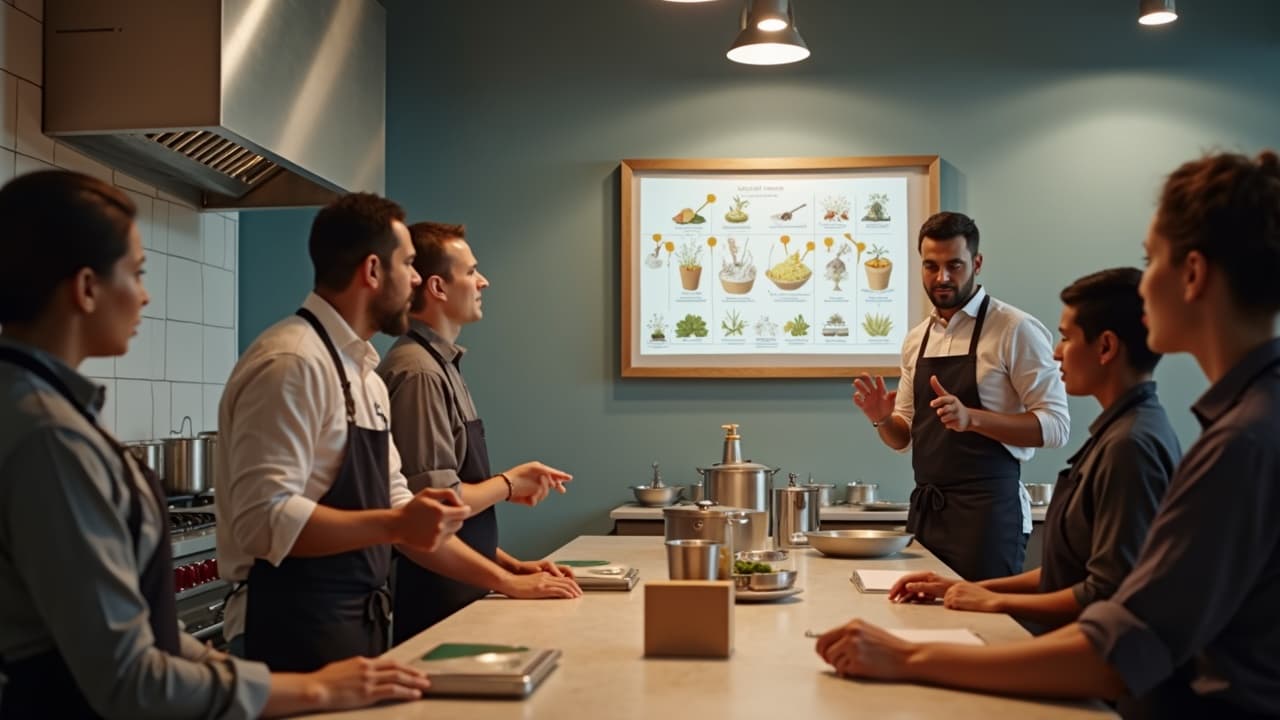
You have Ukrainian staff in your kitchen and you need them to understand HACCP, GHP, and allergen rules well enough to follow them correctly.
You have Ukrainian staff in your kitchen and you need them to understand HACCP, GHP, and allergen rules well enough to follow them correctly. This is not just about communication. It is about food safety. A language barrier is a food safety risk, and treating it as anything less puts your guests, your business, and your licence at risk.
This guide gives you a practical, step-by-step approach to training multilingual kitchen workers so they understand the rules, can demonstrate compliance, and are documented correctly in your training register.
- A language barrier is a food safety risk, not just a communication inconvenience.
- Training must be based on showing and doing, not reading and signing.
- Bilingual PL/EN instructions eliminate the most common kitchen mistakes in multilingual teams.
- Training documentation is legally required and checked by Sanepid.
- A pictogram system works where words fail, and should be your baseline regardless of team language.
Why the Language Barrier Matters for Food Safety
Polish and Ukrainian share a Slavic root, which creates a false sense of security. A Ukrainian worker may nod along during a verbal explanation because they recognise individual words, without grasping the precise meaning required in a food safety context.
Consider the word "czysty" (clean). In everyday speech it means "not visibly dirty." In a HACCP context it means "sanitized to procedure using an approved concentration of sanitizing agent, applied for the correct contact time, on a food-contact surface." These are not the same thing. A worker who cleans a cutting board with water and considers it done has not understood the rule, even if they nodded when you explained it.
Real scenarios where a language gap becomes a safety incident:
- A worker skips the sanitizing step after washing with water because they understood "wash" but not the separate "sanitize" step that follows.
- A worker accepts a chilled delivery without recording the temperature because they did not know a temperature check was a required step at goods receiving.
- A worker swaps catering containers during plating because they misread the allergen label and did not recognise that the dish contained gluten.
Each of these is a potential Sanepid violation or a guest hospitalisation. The solution is not slower, louder Polish. It is a different training method.
What Every Kitchen Worker Must Know, Regardless of Language
HACCP in Practice
- Temperature control: safe storage temperatures (chilled below 5 C, frozen below minus 18 C), minimum cooking temperatures for different product types, and safe serving temperatures for hot foods (above 63 C).
- Critical control points: delivery (temperature check, visual inspection), cooking (core temperature probe), cooling (from 60 C to 20 C within 2 hours, then to 5 C within 4 hours), and service (holding temperature).
- When something goes wrong: report it immediately, do not hide it, do not guess. Your kitchen needs a clear "if in doubt, report" culture before any language training makes sense.
GHP Daily Practice
- Hand washing: not "often" but at specific triggers: after touching raw meat, after using the toilet, after handling waste, after blowing the nose, before starting a task with ready-to-eat food. The trigger-based system is easier to train than abstract frequency rules.
- Clothing rules: clean uniform at the start of every shift, hair covered, no jewellery, no nail varnish.
- Raw and ready-to-eat separation: colour-coded boards and knives make this visual and enforceable without language. Red for raw meat, green for vegetables, blue for fish, yellow for poultry, white for ready to eat.
- Sick worker rule: diarrhoea, vomiting, or fever means do not come in. No negotiation. This rule must be understood unambiguously. Use a pictogram card if necessary.
Allergens
- Where to find allergen information for each dish (your allergen matrix or recipe cards).
- How to answer a guest's allergen question: the correct answer is to direct them to the manager or designated trained staff member, not to answer from memory.
- Cross-contact: separate tools and surface, not just "don't add the nut." A knife used for a walnut tart cannot be rinsed and used for a gluten-free order without a full wash, sanitise, and rinse cycle.
How to Train Step by Step with Language Guidance
Step 1: Prepare Visual Materials Before Speaking
Before your first conversation with a new worker, have these ready:
- A3 laminated pictogram posters at each workstation covering hand washing steps, colour-coded board system, and temperature control zones.
- A photo of a correct fridge setup next to a photo of a common incorrect setup (raw meat above ready-to-eat food).
- The 14-allergen icon table posted at the pass and at the prep station.
One clear image replaces one hour of verbal explanation. This is not a shortcut; it is a better method.
Step 2: Train in the Kitchen, Not a Back Office
Walk the worker through the kitchen physically. Stand at the sink: "Here you wash your hands. Like this." Demonstrate all seven steps. Walk to the fridge: "Raw here. Ready to eat here. Never together." Point. Show. Repeat.
Keep sentences short: subject, verb, object. Avoid compound sentences and idioms. "We wash hands before touching salad" is better than "make sure you've cleaned up before going anywhere near anything that isn't going to be cooked." Speak at normal pace but slower than you would with a native speaker. Do not raise your volume; it does not help comprehension.
Step 3: "Show Me" Verification Instead of a Written Test
A written test measures language ability, not food safety knowledge. Instead, after training, ask the worker to demonstrate:
- Where do you write the temperature? (They point to the temperature log.)
- Show me how you wash your hands. (They demonstrate at the sink.)
- This delivery of chicken arrived. What do you do? (They pick up the probe thermometer and open the temperature log.)
Correct demonstration equals knowledge. Sign off the training register on this basis.
Step 4: Buddy System for the First Seven Days
Pair the new worker with a colleague who speaks their language or English. The buddy's role is not to translate documents. It is to answer "what does this mean?" in real time, without the new worker feeling embarrassed to ask. This removes the most common source of silent non-compliance: a worker who does not understand but does not want to admit it.
Step 5: Reinforcement at Day 3 and Day 30
One training session is not enough. Plan two short follow-ups: a 5-minute check at the workstation on day 3 (is the board colour code being followed? is the temperature log being filled?) and a 10-minute refresher at day 30 (any questions that have come up, any observed gaps). Document both in the training register.
Why Bilingual PL/EN Instructions Work Better Than Google Translate
English has become the working language of multilingual kitchens across Poland. A Ukrainian worker, a Nepali worker, and a Filipino worker may share no common language with each other or with their Polish colleagues, but many will have basic English. One set of PL/EN instructions - like those included in a ready-made HACCP documentation package - covers all of them.
Google Translate is not suitable for food safety content. "Sanitizing food contact surfaces" translated automatically may produce "disinfection of working surfaces," losing the CCP-specific meaning that the inspector and your HACCP plan rely on. Machine translation does not know the difference between a general cleaning instruction and a critical control point record requirement.
Your bilingual instruction posters should follow this format:
- Polish and English text side by side, not on separate pages or separate posters.
- A pictogram for every point on the list.
- No more than seven points per poster.
- A3 size, laminated, fixed at the point of use (sink, fridge, goods receiving area, pass).
Documenting Training: Legal Requirements
A training register is required by Polish food safety law and inspected by Sanepid. A ready-to-use register template is part of the GastroReady HACCP documentation packages. Your register must record:
- Date of training.
- Employee name.
- Topic covered (e.g., hand hygiene, temperature control, allergen management).
- Form of training (practical demonstration, presentation, workstation induction).
- Signature of the trainee and the trainer.
Keep the register in Polish regardless of the language training was delivered in. Training can be conducted in any language the employee understands; the record must be in Polish for the inspector. Retain training records for a minimum of two years. In practice, keep them for the full duration of employment plus two years.
Pictogram and Colour-Code System
When language fails entirely, images take over. A comprehensive pictogram system for your kitchen covers:
- Colour-coded boards: Red for raw meat, green for vegetables, blue for fish, yellow for poultry, white for ready to eat. Post the colour key at every prep station.
- Temperature pictograms: A thermometer with the acceptable range displayed at every fridge and freezer door.
- Hand washing steps: A seven-step illustrated poster at every hand wash basin.
- 14-allergen icon table: Posted at the pass and at the prep station, with allergens highlighted for each dish on your menu.
- Sick worker card: Pictograms showing the symptoms (vomiting, diarrhoea, fever) with a red cross and "Stay home. Call your manager."
These materials are not optional extras. They are the baseline safety infrastructure for a multilingual kitchen, and they benefit every worker regardless of language.
For more on the legal documentation requirements when employing foreign workers, see Hiring Foreign Workers in Catering: Documents and Legal Obligations. For BHP and hygiene training requirements, see OHS and Hygiene Training in Catering: What the Law Requires.
Frequently Asked Questions
Must HACCP training be conducted in Polish?
No. Polish law requires that training be understandable to the employee. If your worker does not speak Polish, you must provide training in a language they understand, using bilingual materials, a translator, or pictogram-based instruction. The training register entry must be in Polish, but the training itself can be in any language.
Must every Ukrainian worker have a sanitary health check (orzeczenie sanitarno-epidemiologiczne) before starting work?
Yes. Every food handler, regardless of nationality, must have a valid medical certificate for sanitary-epidemiological purposes before they begin handling food. This includes Ukrainian citizens working under the simplified notification procedure. The check must be completed before the first shift, not during the first week.
How do I train someone who speaks neither Polish nor English?
Use pictogram-based instruction as your primary method. Supplement with a buddy who shares their language, or arrange a translator for the initial induction. In a kitchen where words fail entirely, demonstrating each task physically and verifying through a "show me" test is the only reliable method. Document the training form as "practical demonstration with pictogram support."
Can I run the training myself or do I need an external company?
For hygiene and HACCP training, you can run it yourself as the business operator, provided you have the knowledge to do so. For OHS (BHP) training, the general induction must be conducted by a qualified BHP specialist or by an employer who has completed the required BHP qualification course. Check which training categories you are qualified to deliver before assuming you can cover everything in-house.
What are the consequences of undocumented training?
Sanepid can issue a warning, an administrative fine, or in serious cases a suspension of operations for missing or incomplete training records. The State Labour Inspectorate (PIP) can also fine you for missing OHS training records. More importantly, if a food safety incident occurs and you cannot show that the worker was properly trained, your legal exposure increases significantly. Documentation is your protection, not just a formality.