Sanitary Requirements for a Catering Premises in 2026
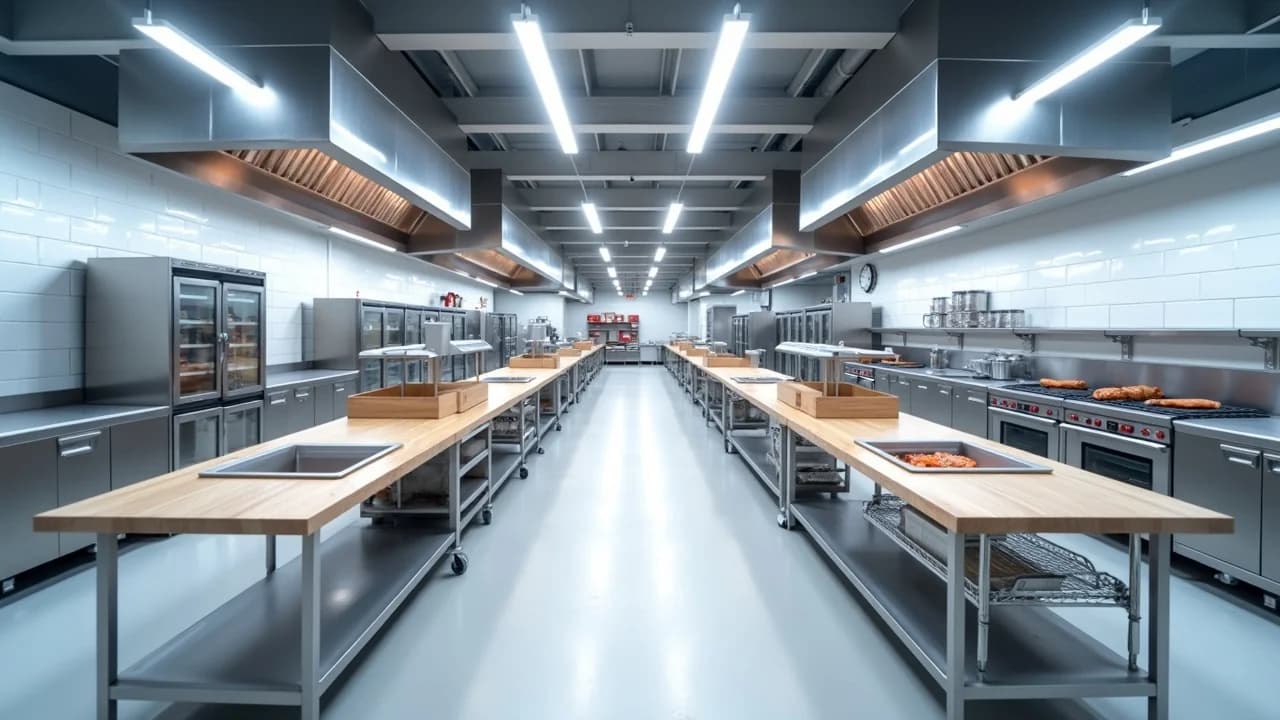
The sanitary requirements for a catering premises in Poland come from EU Regulation 852/2004 and Polish food safety law.
The sanitary requirements for a catering premises in Poland come from EU Regulation 852/2004 and Polish food safety law. Every restaurant, cafe, and catering kitchen must meet them before Sanepid issues an operating approval. This checklist covers every area the inspector will walk through in 2026.
Key points:
- Requirements apply to every catering business regardless of size.
- The inspector checks layout, ventilation, water access, surface condition, and storage organisation.
- Even one non-compliance can delay your opening by weeks.
- Most violations involve details that are cheap to fix if you know about them before the inspection.
Kitchen Premises Requirements
The kitchen is where the inspector spends the most time. Regulations focus on a few critical elements.
Zone separation comes first. Your kitchen must have clearly separated areas for raw preparation (washing, peeling, portioning raw ingredients), heat treatment (cooking, frying, baking), and plating or service. These do not need to be separate rooms, but the "dirty" and "clean" routes must not cross. If space is limited, document a time-based separation protocol in your HACCP plan to show the inspector you have thought this through.
Kitchen checklist:
- Separate raw preparation zone
- Separate heat treatment zone
- Service area separated from the goods receiving area
- Dedicated hand wash basin with hot and cold running water, liquid soap, and single-use paper towels (separate from prep sinks and dishwashing)
- Dishwashing area positioned so it does not interfere with food preparation
- Lighting: minimum 300 lux at workstations, 500 lux in inspection or quality-control areas; shatter-proof covers on all light sources
- Floor: washable, non-slip, no cracks or holes; floor drains with traps if required for the type of operation
Sanitary Facilities Requirements
Sanitary facilities are the second area inspectors check immediately after the kitchen. The rules here are specific with little room for interpretation.
- Separate toilets for staff and guests (absolute requirement; sharing is not accepted)
- An anteroom at the staff toilet with a hand wash basin, hot and cold running water, liquid soap, and paper towels
- A changing area or designated space for work clothes and personal clothes, stored separately in closed lockers
- Guest toilet accessible without passing through the kitchen or food storage areas
- Covered waste bins in every sanitary room
A frequent problem in older buildings is a single shared toilet for staff and guests. Sanepid will not accept this. If space is constrained, a structural change is required and it must be planned before the renovation, not after.
Ventilation and Climate Control
Ventilation is one of the most commonly underestimated requirements and one of the most expensive to fix after the fact.
- Mechanical extraction over all heat treatment equipment, with a grease filter in the hood
- Hood capacity matched to the output of your cooking equipment (an installation engineer should calculate this)
- Fresh air supply to compensate the extraction; without it the hood cannot function correctly
- Ventilation in toilets (mechanical or gravity with adequate capacity)
- Ventilation in food storage areas: air circulation without condensation
- Airflow direction: from clean zones toward dirty zones, never the reverse
- Filters that can be cleaned or replaced
- Annual service and cleaning records for ventilation systems (the inspector may ask for these)
Practical tip: ask the installer for a commissioning report that states the measured airflow. If the ventilation is undersized and you have steam and grease accumulating in the kitchen, that is a compliance issue.
Water and Drainage
Running hot and cold drinking water and a functioning drainage system are foundational requirements for any catering premises.
- Hot and cold drinking water at every workstation that needs it (kitchen, dishwashing, hand wash basins)
- Water from the municipal supply or from a private source with a current quality test
- Separate hand wash basins distinct from prep sinks and dishwashing sinks
- Touchless or elbow-operated taps recommended; increasingly required in new premises
- Drainage to the municipal sewerage system or to a sealed cesspit with a documented disposal contract
- Grease separator required in most catering premises, especially those with significant frying
- Non-return valves to prevent sewage backflow
- All connections sealed and leak-free
The grease separator is frequently overlooked. Its absence can cause problems not only with Sanepid but also with the building administrator and the drainage service provider.
Surfaces and Materials
Every surface in the kitchen and food storage areas must be washable, non-toxic, and easy to maintain. The rule is simple: if you cannot clean it properly, it is not compliant.
- Walls: smooth, washable, light-coloured, tiled or coated with washable paint, to a minimum height of 2 metres
- Floors: washable, non-slip, chemical-resistant, no cracks
- Ceilings: smooth and cleanable; no exposed pipes or cables; suspended ceilings with smooth panels are acceptable
- Worktops: stainless steel, granite, or another material approved for food contact
- Doors: washable; self-closing recommended between the kitchen and other areas
- Windows: insect-proof mesh if the window can be opened
- Wall-to-floor junctions: coved or sealed to prevent dirt accumulation
- No absorbent materials in production areas: no untreated wood, no carpets, no fabric wall coverings
The most common mistake: walls painted with standard emulsion paint. At the first wash it begins to peel, leaves streaks, and the inspector sees it immediately. A quality washable paint or wall tiles pay for themselves quickly.
Food Storage
How you store food tells the inspector whether you understand food safety or just have the paperwork.
- Dry store: ventilated, dry, below 25 C, no direct sunlight; metal or plastic shelving (not untreated wood); products stored at least 20 cm above floor level, never directly on the floor
- Fridges and freezers with thermometers and a temperature log
- Raw products stored separately from ready-to-eat products (separate shelves or separate units)
- Opened products labelled with the opening date and the use-by-after-opening date
- FIFO (first in, first out): older products at the front
- Chemicals stored in a separate locked cupboard, never together with food
- No expired products (obvious, but the inspector always checks)
Waste Management
Waste handling is checked for two reasons: contamination risk and pest attraction.
- Bins with lids (foot-pedal operated where possible) in every production area
- Disposable bags in all bins, changed regularly
- Waste removed from the kitchen at minimum after each shift
- Designated waste storage area outside the premises (container or assigned point)
- Contract with a licensed waste collector (the inspector may ask to see it)
- Separate collection for cooking oils if applicable, with its own disposal contract
- Waste route must not cross the food delivery route
- Waste storage area secured against pests
- Waste bin sanitizing on a documented schedule
Pre-Inspection Checklist
Premises and Layout
- □ Zone separation (raw, heat treatment, service) is clearly visible
- □ Dirty and clean routes do not cross
- □ Staff toilet separated from guest toilet
- □ Changing area or lockers for work and personal clothes
- □ Lighting sufficient and light sources covered
Installations
- □ Hot and cold running water at all required workstations
- □ Dedicated hand wash basins separate from prep sinks
- □ Mechanical extraction over heat treatment equipment
- □ Grease separator installed and working
- □ Drainage sealed and leak-free
Surfaces
- □ Walls washable to minimum 2 m height
- □ Floors without cracks, non-slip
- □ Worktops stainless steel or approved food-contact material
- □ Windows with insect-proof mesh where applicable
Storage
- □ Fridges and freezers have thermometers
- □ Raw products separated from ready-to-eat products
- □ Shelving metal or plastic; products at least 20 cm above floor
- □ Chemicals in locked separate storage
Waste and Documents
- □ Bins with lids in all production rooms
- □ Waste disposal contract available
- □ HACCP and GHP documentation prepared and consistent with the premises
- □ Ventilation service records available
- □ Sanitary health certificates (orzeczenia sanitarno-epidemiologiczne) for all staff
FAQ
Are the requirements the same for a small bar and a large restaurant?
The basic requirements apply to all catering businesses regardless of size. Differences arise in scale: a small bar may not need several separate cold storage units, but zone separation, ventilation, and water access are always required. Inspectors assess proportionality relative to the type and scale of the operation.
What if my premises cannot meet all requirements?
The inspector issues recommendations with a deadline for correcting deficiencies. Minor issues (such as missing window mesh) may give you a few days to fix. Serious deficiencies (no mechanical ventilation, no separate staff toilet) will delay your approval until they are resolved. This is why you should consult Sanepid on your layout before the renovation, not after.
Is a kitchen design plan (projekt technologiczny) mandatory?
Formally a design plan is not required in every case, but many inspectors expect a floor plan with zones, product flow routes, and equipment positions marked. A professional design plan simplifies the approval process and reduces the risk of requiring corrections.
How often does Sanepid inspect after the initial approval?
Scheduled inspections typically occur every one to two years, but can be more frequent for new premises, after a complaint, or following previous deficiencies. An unannounced inspection can happen at any time. Maintain your standards every day, not just before a planned visit.
Can I prepare the HACCP documentation myself?
Yes. The regulations do not require a food technologist to create the documentation. You must understand the HACCP principles and adapt the documents to your premises. Ready-made templates can help, provided they are tailored to your type of operation. GastroReady provides HACCP and GHP documentation adapted to catering businesses.
Need HACCP documentation for your restaurant?
GastroReady provides ready-made HACCP, GMP, and GHP templates adapted to catering businesses. Complete them in one evening and walk into your Sanepid inspection ready.