Storage and Cooking Temperatures: How to Measure Without Paranoia
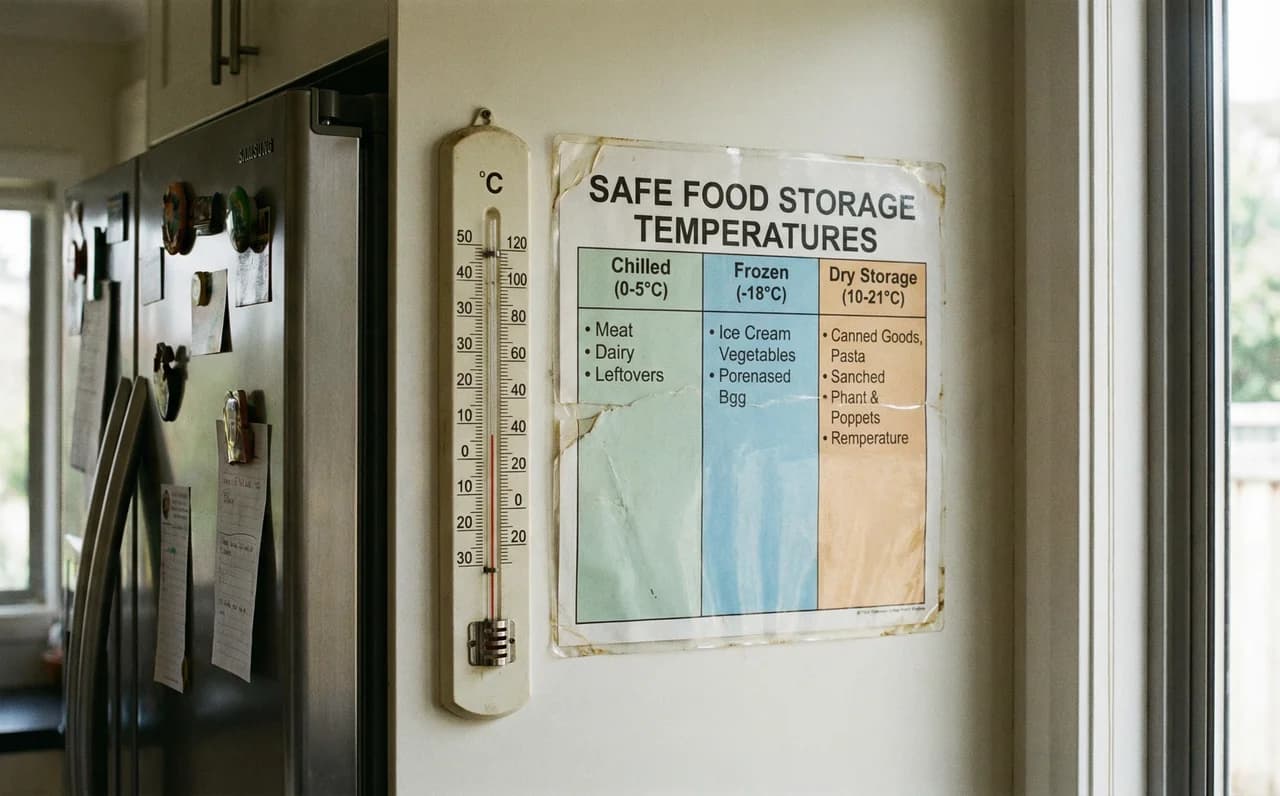
Temperature control is an HACCP classic, but it doesn't have to mean obsession. See where measurement matters and how to avoid 'paperwork theater'.
Temperatures are one of the most common inspection topics - because they are easy to check and easy to prove... if you have a system.
The most common mistake:
- either you don't measure at all,
- or you measure everything, which means you end up measuring nothing.
This post shows you a healthy approach: where to measure, how to respond, and how to avoid the trap of "temperature theater."
Reference temperature table - your cheat sheet
Here are the thresholds you need to know by heart. Print, laminate, and stick by the fridge and at your workstation:
- Fridge: 0 degrees C to 4 degrees C - this is the safe range. Above 5 degrees C you start having a problem. Above 8 degrees C you have a SERIOUS problem.
- Freezer: -18 degrees C or below - not "somewhere below zero," not "it's cold." Minus eighteen or lower. A frozen product that was at -12 degrees C is losing quality and safety.
- Cooking meat (core temperature): 75 degrees C or above - this is the temperature at which bacteria die. Measure INSIDE, not on the surface. Probe inserted into the thickest part.
- Poultry (core temperature): 75 degrees C or above - chicken is the most common source of salmonella. There is no "almost done." Either it reads 75 degrees C in the center or it goes back on the heat.
- Hot holding (e.g., bain-marie): 63 degrees C or above - food at the pass, soup in a warmer, sauce in a bain-marie. Below 63 degrees C bacteria start multiplying. A dish sitting at 50 degrees C for 2 hours is not a "warm dish" - it is an incubator.
- Cold storage (salads, desserts, raw): 4 degrees C or below - everything served cold that has not undergone thermal processing must stay refrigerated until the moment of service.
- Danger zone: 5 degrees C to 63 degrees C - this is the "danger zone." In this range bacteria multiply fastest. Food should not spend more than 2 hours total in this zone. After 4 hours - discard. No discussion.
Where temperature monitoring matters most
In most venues, you get the biggest return for the least effort from:
- Refrigeration equipment (most common deviations) - fridges, freezers, walk-in coolers. This is where temperature "escapes" most often: someone left the door open, the seal is worn, the compressor died overnight.
- Deliveries (incoming risk) - product comes from outside. You don't know what conditions it traveled in. Measuring at receiving = your first line of defense.
- Critical cooking processes (if applicable to your operation) - grilled meats, roasting, sous-vide cooking. Here the core must reach 75 degrees C.
- The pass / packing for delivery (time + conditions) - food packed into a delivery bag sometimes sits 20 minutes on the counter. If it drops below 63 degrees C during that time - you have a problem.
You don't have to measure everywhere. You have to measure where it makes a difference.
What to do when the temperature is out of range - step by step
This is the key. Because measuring without acting is pure decoration. Here is the procedure:
Step 1: Measure again
- The thermometer may have been poorly placed. Measure once more, in a different spot in the unit. If the reading is confirmed - move on.
Step 2: Assess the risk
- A fridge at 6 degrees C for an hour is very different from a fridge at 12 degrees C since overnight. The question: how long has the temperature been elevated? What is inside?
Step 3: Secure the products
- If you have a second fridge - transfer the products. If not - contact the manager. Products that have been above 8 degrees C for more than 2 hours should be considered waste.
Step 4: Fix the cause
- Was the door left open? Close it. Damaged seal? Report for repair. Compressor failed? Call a technician. Don't leave it "until tomorrow" - the temperature won't wait.
Step 5: Record everything
- In the log, enter: date, time, measured temperature, what you did, who made the decision. This is your proof during an inspection that you have a system - not a perfect one, but one that responds.
Types of thermometers and calibration
Not every thermometer is right for every task. Here is what you should have:
- Probe thermometer (needle type) - for measuring the core temperature of meat. Insert into the thickest part, wait for stabilization (10-15 seconds). Cost: affordable. This is your essential tool.
- Infrared thermometer (non-contact) - for quick surface readings: counters, deliveries, packaging. Fast, but measures the SURFACE, not the core. Do not use it to check if chicken is done - that is not what it is for.
- Fridge thermometer (stationary) - a small thermometer hanging inside the fridge. Shows the current temperature without opening the door (if digital with a sensor). Basic equipment for every fridge.
Calibration - once a month:
- Place the probe thermometer in a cup of ice water (0 degrees C). It should read 0-1 degrees C.
- Place it in boiling water (100 degrees C at sea level). It should read 99-101 degrees C.
- If the deviation is greater than 2 degrees C - replace the thermometer or have it professionally calibrated.
Record the calibration in a log. The inspector may ask: "When did you last calibrate your thermometers?" If you have a record - good. If you get a shrug - bad.
Temperature checks at delivery
Delivery is the moment when risk enters your kitchen from outside. Here are the rules:
- Fresh meat: max 4 degrees C at receiving. If the thermometer reads 7 degrees C - ask the supplier what happened. If it reads 10 degrees C - reject. No negotiation.
- Frozen goods: -18 degrees C or below. If the packaging is soft or you see ice crystals (a sign of thawing and refreezing) - reject. Even if the current temperature is OK.
- Dairy: max 4 degrees C. Yogurt, cream, milk - everything must arrive cold. Warm yogurt is not "a bit too warm" - it is a potential poisoning risk.
- Ready meals / catering: hot 63 degrees C or above, cold 4 degrees C or below. A dish that arrived at 45 degrees C passed through the danger zone - and you don't know for how long.
Measuring at delivery takes 15 seconds. Infrared thermometer pointed at the package. If in doubt - probe thermometer into the product. 15 seconds that can save you during an inspection and protect your customers' health.
Measurement without theater: 5 rules
- Measure at fixed times (start/end of shift). Not "when you remember."
- One person responsible per shift. Not "someone." The shift cook or manager.
- One spot for the thermometer and the rule "always working." The thermometer has its place. Everyone knows where it is. Everyone knows it must work.
- Entries must reflect reality (deviations happen). A log full of perfect entries is a sign it is being faked.
- Deviation = response + record (without this, monitoring is pointless). You measured 7 degrees C? What did you do? Write it down. That is what separates a system from theater.
Typical "temperature theater" - recognize it in yourself
Here are scenarios the inspector knows by heart and sees every day:
- "Retroactive log" - on Friday someone sits down and fills in logs for the entire week. They write 3 degrees C, 3 degrees C, 3 degrees C, 3 degrees C, 3 degrees C. Perfect temperature, identical handwriting, identical times. The inspector opens the fridge, the thermometer reads 6 degrees C. Disaster.
- "Display thermometer" - you have a thermometer, it looks nice, it hangs in the fridge. But the battery died 3 months ago. Nobody noticed because nobody looks.
- "We measure but we don't act" - the log has an entry: "7 degrees C." And nothing else. No response, no corrective action entry. The inspector asks: "What did you do about this deviation?" Answer: "Well... nothing." That is worse than not measuring at all.
- "Bain-marie by feel" - soup is sitting in a warmer. You ask the cook: "What temperature is it?" Answer: "It's hot." How hot is "hot"? 70 degrees C? 50 degrees C? 40 degrees C? Without a measurement you don't know. But the inspector measures.
The biggest pitfall: no corrective actions
It is not about being perfect. It is about being able to say:
- what happened,
- what you did,
- how you prevent it from happening again.
That is the difference between a system and theater. The inspector does not penalize deviations. They penalize the lack of response to deviations.
Mini-test: do your temperatures protect you? YES/NO
- In the past 2 weeks, have you had any honestly recorded deviation?
- Does your team know what to do when the fridge goes down?
- Is measurement part of the shift rhythm, not "sometime"?
- Do you have a simple log that can be filled in within 30 seconds?
- Were your thermometers calibrated in the past month?
- Do you measure delivery temperatures at receiving?
- Do you know what the "danger zone" (5-63 degrees C) is?
- Do dishes at the hot pass have a temperature of 63 degrees C or above - measured, not "felt"?
If the answer is "not really" - the problem is process design, not people.
Where GastroReady comes in
GastroReady gives you a ready-made temperature monitoring system: a reference table of thresholds laminated for hanging by the fridge, practical logs with instructions for responding to deviations, a delivery inspection procedure, and thermometer calibration checklists. A system that actually works in the kitchen, not just in a binder.
Need complete HACCP documentation?
GastroReady offers ready-made HACCP, GMP, and GHP templates for every type of food business. From 299 PLN, with PL/EN instructions.